

Soweto Care System (often known simply as SowetoCares) has been a fixture of NGO administration in South Africa since 2007, when it started life as a corporate social responsibility project supporting home-based caregivers in Soweto. Since then it's grown to support well over a hundred NGOs across the region, mostly in home-based care, orphan and vulnerable children (OVC) programmes, and HIV/AIDS counselling and testing services. If your organisation is currently on Soweto Care System and weighing up a move to Makerble, it makes sense to do your research. Both systems have served a similar part of the sector for a long time but there are some signficant differences in how the two platforms are built and who they put in the driving seat.
What Soweto Care System does well
Soweto Care System's longevity is genuinely part of its appeal. It's a stable, web-based database that's been shaped over nearly two decades by the specific requests of the NGOs using it. Beneficiaries, employees, home visits, needs and programmes can all be captured and retrieved in detail, and the underlying data model supports hierarchical organisations, so head offices, provincial offices and district-level teams can each see the right slice of the data. The vendor also offers a genuinely hands-on implementation service: a needs analysis up front, tailored reports built to match how your organisation actually works, and a six-monthly review to catch anything that needs to change. For organisations that want a partner to wholly configure the system for them rather than having the option configure it themselves, that's a definite strength.
Where it starts to show its age
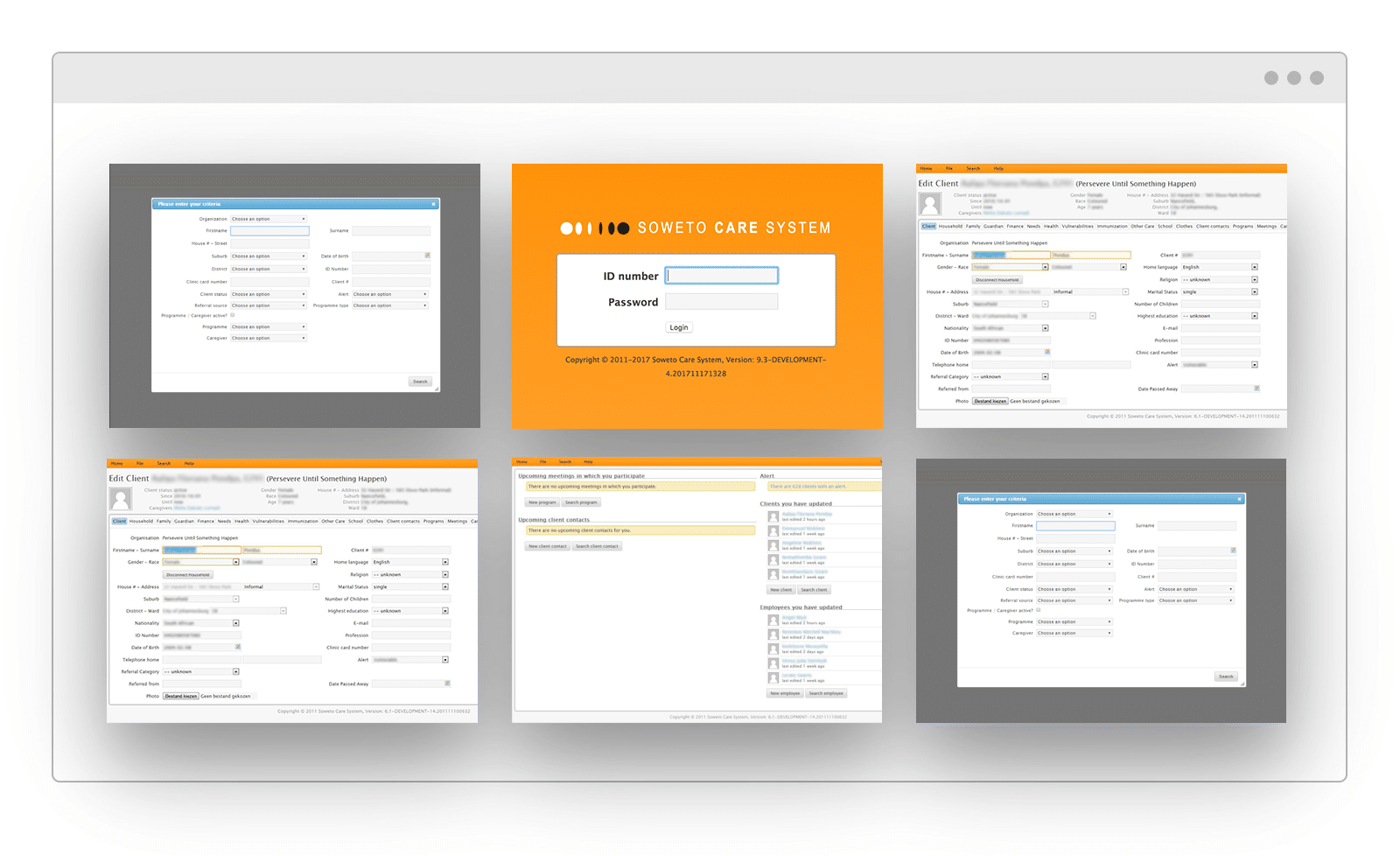
The trade-off is that Soweto Care System was designed around a 2007-era idea of what NGO software should look like, and it shows in the day-to-day experience. The interface follows a fairly traditional, form-and-menu case management pattern rather than anything built around dashboards or visual summaries. This means that it's useful for capturing detailed records on a case by case, but it's almost impossible to spot trends at a glance. Reports are described by the vendor as coming in Excel, PDF or hardcopy form, and from what we've heard from organisations that use it, that generally means tables rather than the kind of interactive charts, progress boards or trend graphs that funders and boards increasingly expect to see.
By comparison, Makerble provides a user-friendly intuitive interface.
Self-service reporting vs. pre-built reports
This is probably the biggest difference. Soweto Care System's own materials describe reports as being tailored by the vendor's team based on an analysis of each organisation's needs. This works well at the outset, but the downside is that it makes your frontline and M&E teams dependent on that vendor relationship every time a funder asks for something new or you want to use the tool differently. We've heard from teams on Soweto Care System who weren't sure whether building or editing their own reports was something they were technically able to do, or something that sat behind a level of access they didn't have. Either way, the practical result was the same: waiting on someone else to build the report rather than building it themselves. Makerble takes the opposite approach. Reporting, dashboards and demographic breakdowns are things any authorised user can build and adjust themselves, in real time, without raising a request and waiting for it to come back.
By comparison, Makerble empowers you to create your own outcomes, indicators, reports and dashboards. Our setup team can also set everything up for you. When you want to make changes, you have the ability to do it yourself or we can assist.
Getting your own data out
A related frustration we've heard about is that it can be hard to extract data from Soweto Care System unless it happens to fall inside one of the report templates that's already been built. Navigation is based on dense, deeply nested menus which make it harder to find your way to the record or view you actually need. Makerble is built the other way around: beneficiary records, attendance, survey responses and outcome data all live in one place, with CSV export, API and MCP access available alongside the built-in reporting. This means that getting data out, whether for a quick funder request or a deeper analysis in another tool, doesn't depend on whether someone thought to build that exact report in advance.
On Makerble you're always in control of your data and are able to share it and export it as you need to.
A single, modern platform
Beyond reporting, Makerble brings CRM, scheduling, surveys and impact measurement together as one connected system. Beneficiaries are registered through customisable intake forms, their programme journey is tracked session by session, and their outcomes link directly back to log frames and Theory of Change models sitting alongside the case record. Attendance, engagement and impact can all be seen together rather than pieced together from separate exports. Custom KPIs, custom dashboards and trend charts are built in, reducing how often teams need to fall back on spreadsheets to make sense of their own data. For organisations managing multiple sites, programmes and funder relationships across South Africa, that combination of self-service reporting and one unified environment tends to make the biggest day-to-day difference.
If your organisation is currently on Soweto Care System, considering using it or starting to feel the limits of pre-built reports and dense menus, it's worth seeing what a more self-service, visual approach to reporting looks like in practice. Makerble (shown below) is interactive and it's easy to see how records connect to each other.
To find out more about how Makerble supports case management, reporting and impact measurement for NGOs across Southern Africa, book a demo or explore the platform.





.png)

%208.png)


.png)


